2026-09-18
Beyond the SMAS in Facelift Surgery: Integrated Tissue Control | Tailor Plastic Surgery
Explore Integrated Tissue Control in deep plane facelifts by Dr. Woo-hyun Tak. Learn how addressing the malar fat pad, buccal fat, and deep fascia delivers natural results beyond the SMAS alone.
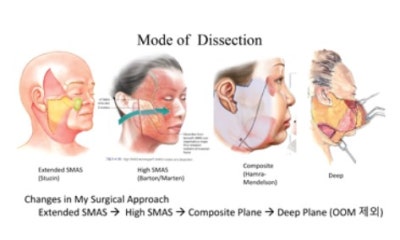
Hello, this is Dr. Woo-hyun Tak from Tailor Plastic Surgery.
Many people have heard that lifting the SMAS layer is essential in facelift surgery, but they often do not know exactly how the procedure is performed.
In reality, facial aging does not occur solely within the SMAS layer.
For some, the malar fat pad descends noticeably; for others, deep fat around the jawline becomes prominent;
and for some, neck muscles, deep fat, and the submandibular glands may pose an even greater challenge.
In Part 1, we covered the fundamental principles of deep plane facelifts and the concept of the SMAS. In this second installment, I will explain Integrated Tissue Control—a key philosophy I emphasize in facelifts, which involves evaluating multiple anatomical layers together and selectively adjusting the necessary tissues.
👉 [Read Part 1 First: Facelift Is Not Just Pulling the Skin — Core Principles of the Deep Plane Facelift]
Is Pulling the SMAS Alone Enough in Facelift Surgery?
Even within deep plane facelifts, applying the exact same surgical plan to every patient may be inappropriate.
I define this approach as Integrated Tissue Control: evaluating multiple structural tissues simultaneously and tailoring the manipulation to each patient’s specific needs.
Below, I have broken this down into six key aspects.
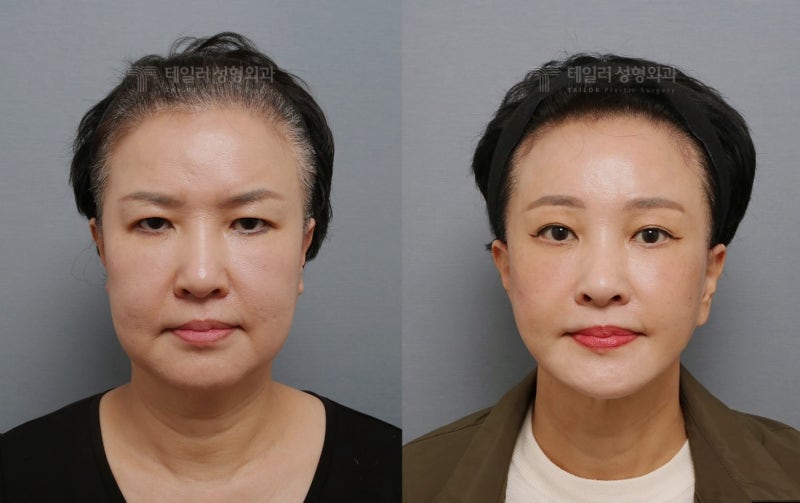
1. Evaluating the Anterior Cheek Fat — Malar Fat Pad
As aging progresses and fat tissue in the anterior cheek descends, the midface becomes flat, and the area above the nasolabial fold can appear heavy.
In such instances, merely pulling the SMAS from in front of the ear may not sufficiently reposition the anterior cheek.
When indicated, techniques to reposition the malar fat pad—the fat tissue of the anterior cheek—to a more youthful position should be considered.
The goal is not to create an excessive amount of volume unconditionally.
It is crucial to observe the patient's innate facial structure and bilateral balance to determine where repositioning the descended fat looks most natural.
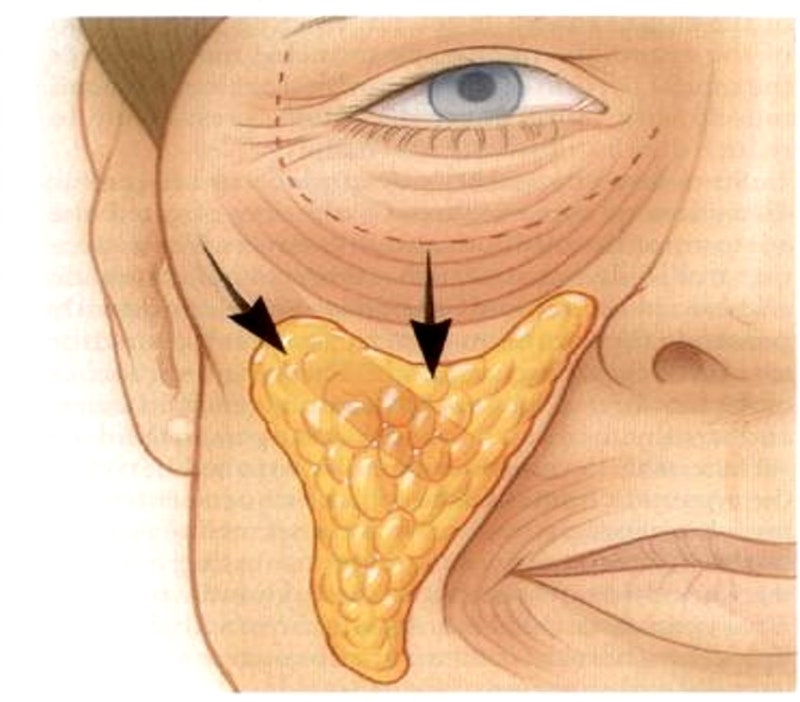
2. Should the Buccal Fat Pad Always Be Removed?
The buccal fat pad, often referred to simply as deep cheek fat, is situated deep within the facial structure.
This fat pad is not something that must be removed in every patient.
In fact, excessive removal can lead to hollowed cheeks over time or give the face an overly gaunt appearance.
Conversely, in some patients, this fat descends or herniates, adding noticeable bulk to the lower face.
In such scenarios, rather than indiscriminate removal, one can selectively modulate or reposition the fat pad based on its volume, location, and overall facial contours.
Thus, when addressing fat during a facelift,
the primary question is not "how much should be removed?"
Rather, it is determining "which fat should be preserved, which should be repositioned, and which specific volume should be reduced."
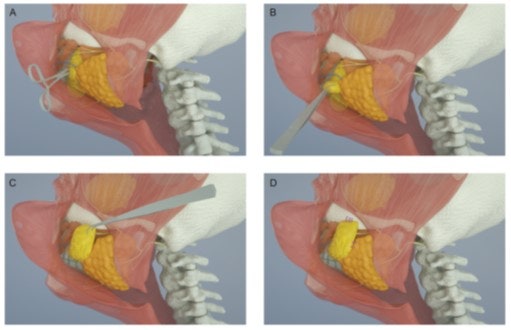
3. A Bulging Submental Area May Not Just Be Fat
"I have a double chin; can liposuction alone fix it?"
This is a question frequently asked during consultations. However, there are multiple causes for a bulging submental (under-chin) area.
It could be excess subcutaneous fat, laxity in the platysma muscle of the neck,
or protruding deep fat and submandibular glands.
In particular, when the submandibular gland ptosis is prominent, manipulating only the skin or fat rarely achieves a well-defined neck contour.
In these cases, a thorough evaluation extending to the deeper structures, including the submandibular glands, is necessary depending on the patient's anatomy.
Nevertheless, submandibular gland reduction is not required for every patient.
It must be selected judiciously after assessing surgical necessity, expected benefits, and its relationship with adjacent anatomical structures.
4. Deep Facial Fat and Fascia Also Shape the Contour
There are instances where, despite thoroughly elevating the skin and SMAS during a facelift, certain areas still appear bulky or heavy.
In such cases, the cause often lies not directly beneath the skin, but within the deep fat or fascial structures situated underneath the SMAS layer.
When necessary, techniques such as trimming deep fat or fascial plication can be utilized to refine the overall facial contour.
Because of this, modern facelifts are not merely about upward 'lifting';
they also incorporate the concept of 'contouring' to re-sculpt the comprehensive framework of the face.
5. Viewing the Temples and Zygoma as Connected Structures
Facial aging is not confined to the jawline. The temples, zygoma, cheeks, and jawline form a continuous, interconnected anatomical network.
Quite often, the deep temporal fascia exhibits sufficient mobility to provide meaningful elevation.
Overlooking this can mean missing an opportunity for additional lifting, which is why I routinely reassess this plane during surgery.
This technique is known as deep temporal fascia plication.
6. Cases Combining Facial Liposuction
Depending on the individual's facial morphology, limited liposuction may be performed concurrently with a facelift.
If fat is concentrated in specific areas—such as around the zygoma, superior to the nasolabial folds, along the jawline, or in the neck—reducing a portion of this fat while repositioning the surrounding tissues can be very beneficial.
However, more liposuction is not necessarily better. Facial fat is an essential component of a youthful appearance; therefore, it is vital to balance how much fat to selectively reduce while preserving volume in crucial zones.
Why Understanding the Facial Nerve Is Essential in Facelifts
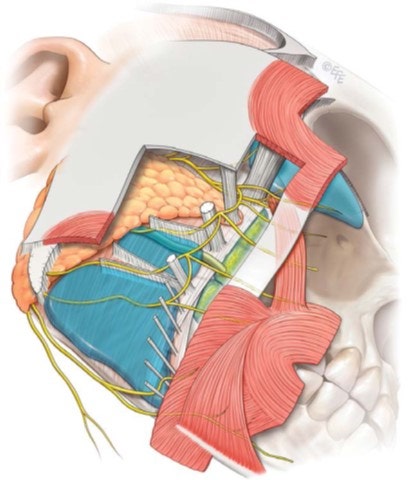
There is a vital anatomical structure that must be carefully respected during a deep plane facelift: the Facial Nerve.
The facial nerve innervates the movements of the forehead, peri-orbital area, cheeks, peri-oral region, jawline, and neck, branching across the entire face. In particular, crucial motor branches course near the temples, zygoma, cheeks, and jawline where dissection occurs.
Therefore, a deep plane facelift is not simply about dissecting deeply.
Understanding precisely which plane to dissect, the exact trajectory of the nerves, and where the relatively safe anatomical spaces lie is paramount.
Integrated Tissue Control — Viewing the Face and Neck as a Unified Structure
In summary, what I emphasize in facelift surgery goes far beyond merely pulling the SMAS.
Depending on the patient, the following structures are evaluated together:
Evaluated Structure | Primary Role |
SMAS | Connects soft tissues; primary target for lifting |
Retaining Ligaments | Anchor tissues — must be released for natural repositioning |
Malar Fat Pad | Correction of midface/anterior cheek sagging |
Buccal Fat Pad | Selective preservation and contour modulation |
Deep Fat and Fascia | Structural contouring |
Deep Temporal Fascia | Additional superior vector lifting |
Cervical Platysma | Refinement of the neck contour |
Submental Fat | Improvement of submental fullness (double chin) |
Submandibular Gland | Resolving lower neck fullness (selective) |
Among these, the specific structures responsible for clinical aging are selectively addressed.
This is the essence of Integrated Tissue Control.
Rather than simply pulling the skin, a facelift is more accurately understood as analyzing how each layer of the face and neck has aged,
and repositioning each structure in harmonious balance according to individual needs.
Academic Presentation — Shared at the Severance Aesthetic Plastic Surgery Symposium
The concept of Integrated Tissue Control presented here is not merely an idea derived from clinical routine.
In June 2026, during the Face & Neck Lift session at the 25th Severance Aesthetic Plastic Surgery Symposium,
I presented to fellow plastic surgeons on the topic:
"Integrated Tissue Control in Deep Plane Face-Neck Lift — SMAS Face-Neck Lift: Deep Plane Facelift and Advanced Manipulation of Surrounding Tissues."

The Severance Aesthetic Plastic Surgery Symposium is one of the most prestigious academic gatherings in Korean plastic surgery.
At this event, I presented the clinical necessity and practical methodology of evaluating and manipulating adjacent structures rather than focusing solely on the SMAS during deep plane procedures,
fostering an in-depth clinical discussion among attending specialists.
Conclusion
Even among patients of the exact same age, the manifestations of aging vary considerably.
One patient may struggle primarily with midface sagging, another with a disrupted jawline, and another with prominent neck laxity.
Consequently, rather than applying a single, rigid technique to every patient,
facelift surgery requires a meticulous process of selectively adjusting individual tissues based on specific anatomical characteristics and aging patterns.
If you are considering a facelift, a comprehensive consultation to determine which specific structures are the primary contributors to sagging is an essential first step.
Sincerely,
Dr. Woo-hyun Tak, Tailor Plastic Surgery
https://youtu.be/f5Hue0fDIWw
※ Individual surgical approaches and results may vary depending on unique anatomical characteristics, skin quality, degree of aging, and previous surgical history.
Frequently Asked Questions
Is lifting the SMAS layer alone sufficient in a facelift?
No. Depending on the patient, adjacent structural tissues must also be adjusted. Facial aging is a multifaceted process involving malar fat pad descent, buccal fat prominence, and submandibular gland ptosis; therefore, integrating the evaluation and selective adjustment of multiple layers beyond the SMAS is essential for a natural result.
Is buccal fat always removed during a facelift?
No, buccal fat should not be removed indiscriminately. Excessive resection can lead to midface hollowing or an overly sunken appearance later on. Decisions to preserve, partially reduce, or reposition this fat should be made cautiously based on lower facial heaviness and overall facial shape.
Can a double chin always be resolved with liposuction alone?
Not always; it depends entirely on the underlying cause of submental fullness. Submental bulging can stem not only from subcutaneous fat, but also from platysmal laxity, deep fat, or prominent submandibular glands, requiring evaluation of deeper anatomical layers to choose the appropriate surgical technique.
Why is understanding the facial nerve critical in deep plane facelifts?
A thorough understanding is vital to prevent nerve injury and ensure patient safety. Branches of the facial nerve control motor movements across the temples, zygoma, cheeks, and jawline; thus, deep plane dissection requires precise anatomical knowledge of nerve trajectories and safe surgical spaces.