2026-09-15
Reducing Forehead Lift Side Effects with the Dual-Plane Method: Clinical Research on Endoscopic Forehead Lifts | Taylor Plastic Surgery
Dr. Woo-Hyun Tak explains the dual-plane endoscopic forehead lift technique, reducing nerve tension and post-op paresthesia while preserving natural, long-lasting brow elevation.
Hello, this is Dr. Woo-Hyun Tak from Taylor Plastic Surgery.
A forehead lift is a procedure that elevates brows and forehead tissues that have sagged due to aging or structural reasons, brightening the eyes and restoring the natural proportions of the upper face.
Because this surgery does not simply pull the skin, but rather adjusts the muscles and tissues around the eyebrows and eyes,
the specific surgical plane and approach used have a decisive impact on the final results and potential complications.
In this article, I will explain the key issue of surgical plane selection, along with clinical research findings demonstrating how the dual-plane method I have developed differs from conventional endoscopic forehead lifts.
In Part 1, we covered the surgical planes used in traditional forehead lifts and the supraorbital nerve.
If you are reading this for the first time, reviewing Part 1 will help with your understanding.
👉 [Read Part 1 First: Forehead Lift — How the Surgical Plane Affects Nerves]
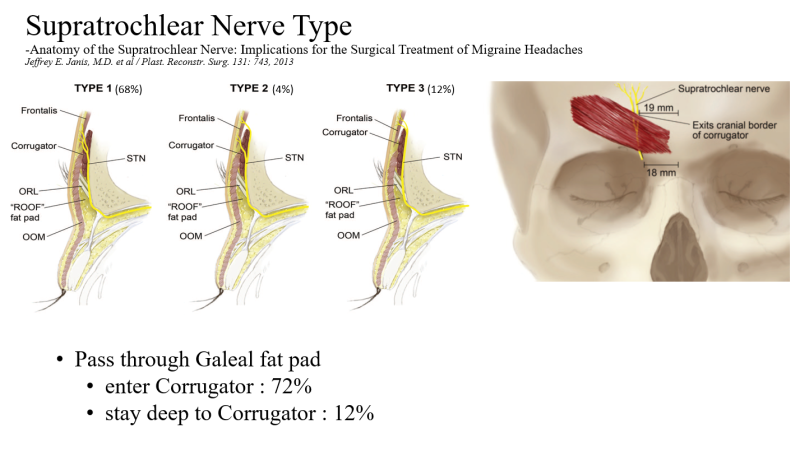
[Photo 1: Conceptual diagram of surgical plane transition in dual-plane forehead lift]
Q1. What exactly is a dual-plane forehead lift?
The method I use does not rely on a single surgical plane from start to finish.
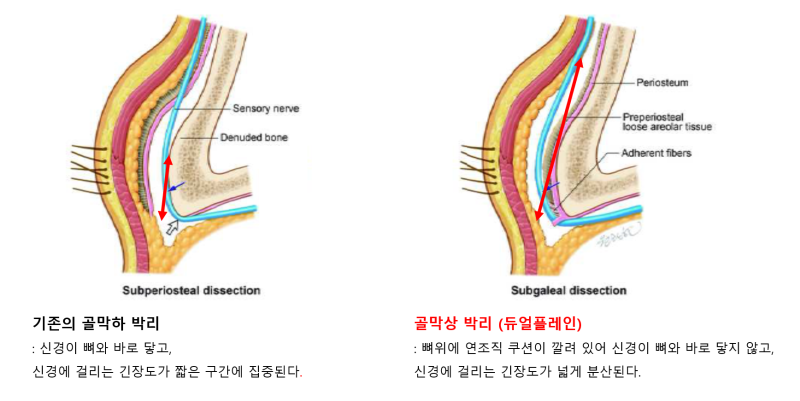
Initially, dissection begins in the subperiosteal plane, just like conventional methods. Then, upon reaching a point approximately 3 cm above the superior orbital rim (the bone above the eye), the periosteum is incised, and the dissection shifts into the subgaleal plane.
In summary:
Upper forehead: Subperiosteal plane → Stable, minimal bleeding
Area near the eyebrows: Subgaleal plane → Preserves nerve-cushioning tissue
Because it utilizes two distinct anatomical planes, it is referred to as the Dual-plane technique, or the Plane-shifting technique, referring to the shift between surgical planes during the procedure.
Q2. Why is the surgical plane shifted approximately 3 cm above the eyebrows?
The most important reason is to reduce tension and compression on the supraorbital nerve and its surroundings.
If subperiosteal dissection is continued all the way down toward the eyebrows, the cushioning tissue between the bone and the nerve pathway can be depleted.
In contrast, shifting to the subgaleal plane at a specific point leaves the periosteum and soft tissues underneath the nerve intact. These tissues act as a natural cushion (padding).
Revisiting the electrical wire analogy from Part 1:
Instead of pulling forcefully from a single focal point, the tension is distributed across a wider segment.
Recognizing that nerve pathways vary per individual is also crucial
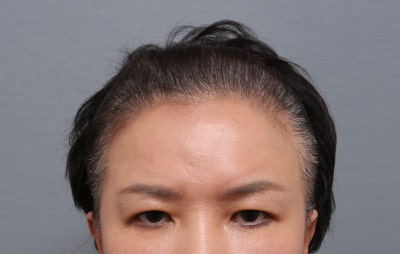
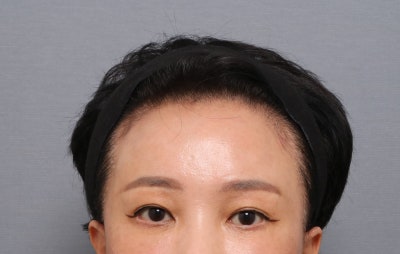
The course of the supraorbital nerve is not identical in every patient.
In some cases, anatomical variations exist where nerve branches emerge from the bone higher than generally expected. If one continues subperiosteal dissection downward toward the eyebrows, there is an increased risk of unexpectedly pulling on these nerve branches.
With the endoscopic plane-shifting approach, the surgical plane is transitioned before approaching the eyebrows. Dissection then proceeds while directly visualizing the nerve under an endoscope, allowing for flexible adaptation to individual anatomical differences.
Q3. Can sensory abnormalities really be reduced? — Clinical Research Results
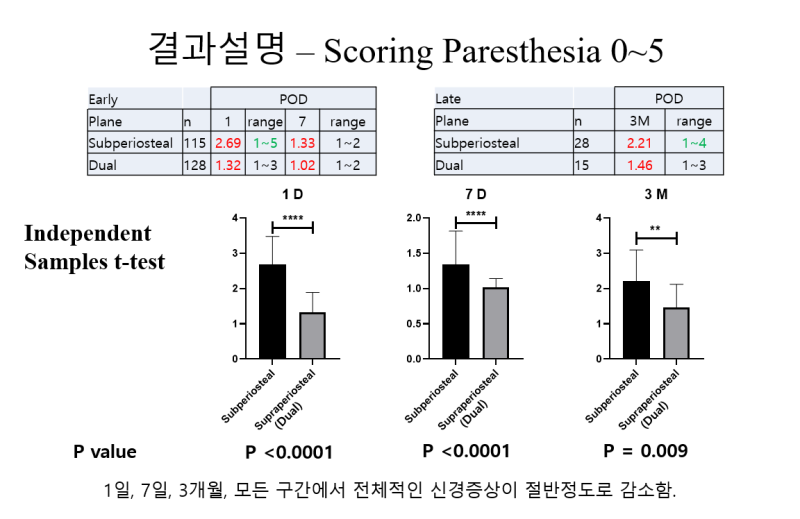
I conducted a direct comparative study between patients who underwent conventional subperiosteal endoscopic forehead lifts and those who underwent the plane-shifting procedure.
Postoperative numbness, headaches, and general discomfort were evaluated using standardized criteria.
The research results are as follows:
Evaluation Timepoint | Reduction in Sensory Disturbance vs. Conventional Subperiosteal Lift |
Day after surgery | Approx. 48% lower |
3 months after surgery | Approx. 32% lower |
Importantly, while sensory disturbance was significantly reduced, there was no statistically meaningful difference in brow elevation between the two methods.
This confirmed that postoperative nerve discomfort can be minimized without compromising the lifting efficacy of the forehead lift.
However, because this study was a retrospective review of cohorts operated on across different timeframes, these exact figures may not apply universally to every individual patient.
Another advantage of the dual-plane forehead lift: direct muscular control
The goal of the plane-shifting method is not solely to decrease numbness.
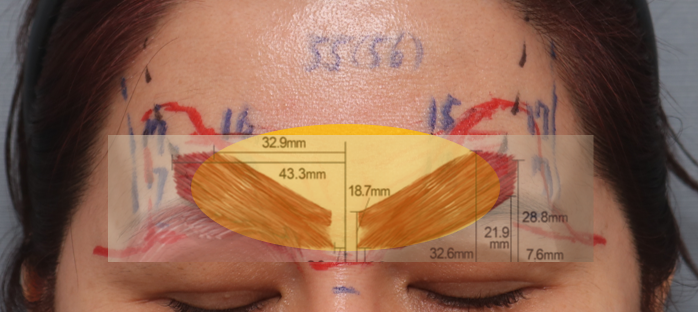
Approaching via the subgaleal plane offers a more direct view of the muscles responsible for pulling the eyebrows downward, primarily the corrugator supercilii and the depressor supercilii muscles.
By visualizing these muscles through the endoscope and selectively releasing or weakening them as needed, we can create a much more natural result by balancing downward muscular pull rather than merely pulling upward with excessive tension.
The essence of a forehead lift is not merely 'how many millimeters it is raised'
During consultations, many patients ask, "How many millimeters will my brows be lifted?" While the degree of elevation is certainly important,
I believe that simply elevating the eyebrows as much as possible is not the ultimate objective of this surgery.
The eyebrows and forehead contain an intricate network of nerves, blood vessels, muscles, and retaining ligaments. Adequately releasing the necessary retaining structures while protecting essential nerves from unnecessary tension is a far more vital surgical principle.
The dual-plane endoscopic forehead lift was developed based on this exact philosophy. By maintaining the benefits of the subperiosteal plane in the upper area and transitioning to a safer plane near vulnerable nerves, the procedure aims to dissect tissues efficiently while mitigating concentrated traction and compression on the supraorbital nerve.
Academic Presentations and Research History — Including APS 2023 and International Presentations
Research into the dual-plane endoscopic forehead lift originated from real-world clinical experience.
Seeking ways to reduce forehead and scalp paresthesia reported by some patients after surgery, I developed the idea of shifting surgical planes, leading to academic presentations starting in 2022.
Among them, the presentation titled "Dual Plane Endoscopic Forehead Lift for Reducing Paresthesia" at the Aesthetic Plastic Surgery 2023 (APS 2023) conference marked the first official presentation of these core concepts to board-certified plastic surgeons in Korea.
It garnered substantial attention by demonstrating both a reduction in sensory disturbance and the preservation of lifting power.

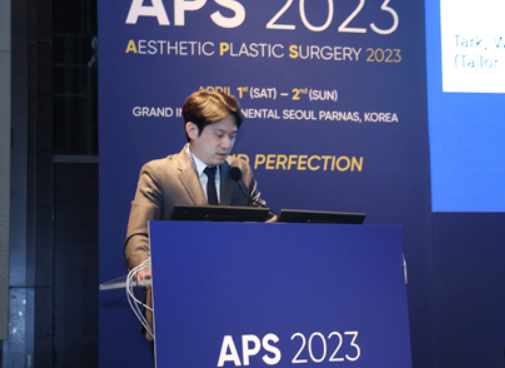
Presentations have continued at both domestic and international academic congresses, and a research manuscript has been submitted to Plastic and Reconstructive Surgery (PRS), the premier journal in plastic surgery, where it is currently under peer review.
Key Presentation History
Year | Conference / Symposium | Presentation Title |
2022 | Severance Aesthetic Symposium | Endoscopic Forehead Lift Live Surgery |
2022 | Daegu APAAC | Balanced Rejuvenation of Upper Face |
2023 | APS (Aesthetic Plastic Surgery) | Dual Plane Endoscopic Forehead Lift for Reducing Paresthesia |
2023 | Busan BAPS | Plane Shifting Endoscopic Forehead Lift Live Surgery |
2023 | China Yanji Aesthetic Symposium | Interrelationship Between Upper Blepharoplasty and Endoscopic Forehead Lift |
2024 | PRS Korean Society of Plastic and Reconstructive Surgeons | Retrospective Review of Endoscopic Forehead Lift by Various Operators |
2025 | PRS Korean Society of Plastic and Reconstructive Surgeons | Refinement of Endoscopic Forehead Lift |
2026 | Oculoplastic Symposium | Plane-Shifting Endoscopic Forehead Lift |
In Summary
An endoscopic forehead lift technique that utilizes the stable subperiosteal plane in the upper forehead, then shifts to a gentler plane near the eyebrows to distribute tension and protect vital nerves.
The true clinical value of this technique lies in refining the anatomical plane of dissection, maintaining optimal lift longevity while significantly curbing postoperative sensory numbness and discomfort.
A reference video is attached below to provide further clinical context.
https://tv.naver.com/v/104322996
Thank you. Dr. Woo-Hyun Tak, Board-Certified Plastic Surgeon.
Frequently Asked Questions
What is a dual-plane forehead lift?
It is a surgical approach that utilizes two distinct dissection planes based on anatomical zones. Dissection begins in the subperiosteal plane in the upper forehead for stability and minimal bleeding, then shifts to the subgaleal plane near the eyebrows to preserve protective nerve-cushioning tissue.
Why shift surgical planes 3 cm above the eyebrows?
The primary aim is to minimize tension and compression around the supraorbital nerve. Transitioning planes leaves soft tissue beneath the nerve to act as a protective cushion, while also allowing flexible adaptation to individual anatomical variations in nerve pathways.
Does it significantly reduce postoperative sensory disturbances compared to conventional techniques?
Yes. Clinical comparative studies show a notable reduction in sensory complications: approximately 48% lower paresthesia the day after surgery and 32% lower at 3 months postoperatively compared to the traditional subperiosteal technique, all while preserving identical brow lifting longevity.
Can muscle adjustments also be made using the dual-plane approach?
Yes. Entering the subgaleal plane allows clear, direct visualization of eyebrow depressor muscles. Surgeons can selectively address the corrugator and depressor supercilii muscles under endoscopic vision, achieving natural brow positioning without relying exclusively on excessive upward tension.